Where do robotaxis go between rides?
Driving empty, a depot, a parking lot or the kerb: where robotaxis wait when nobody is riding, and why it has become a question for cities.
The Lanoo team··4 min read
Between two rides, a robotaxi does one of four things. It keeps driving towards where the next ride is likely to start, it waits in a parking lot or at the kerb, it goes back to a depot to charge and be cleaned, or it parks for the night. Which one depends on the operator's plan, and more and more on what the city allows.
Driving empty
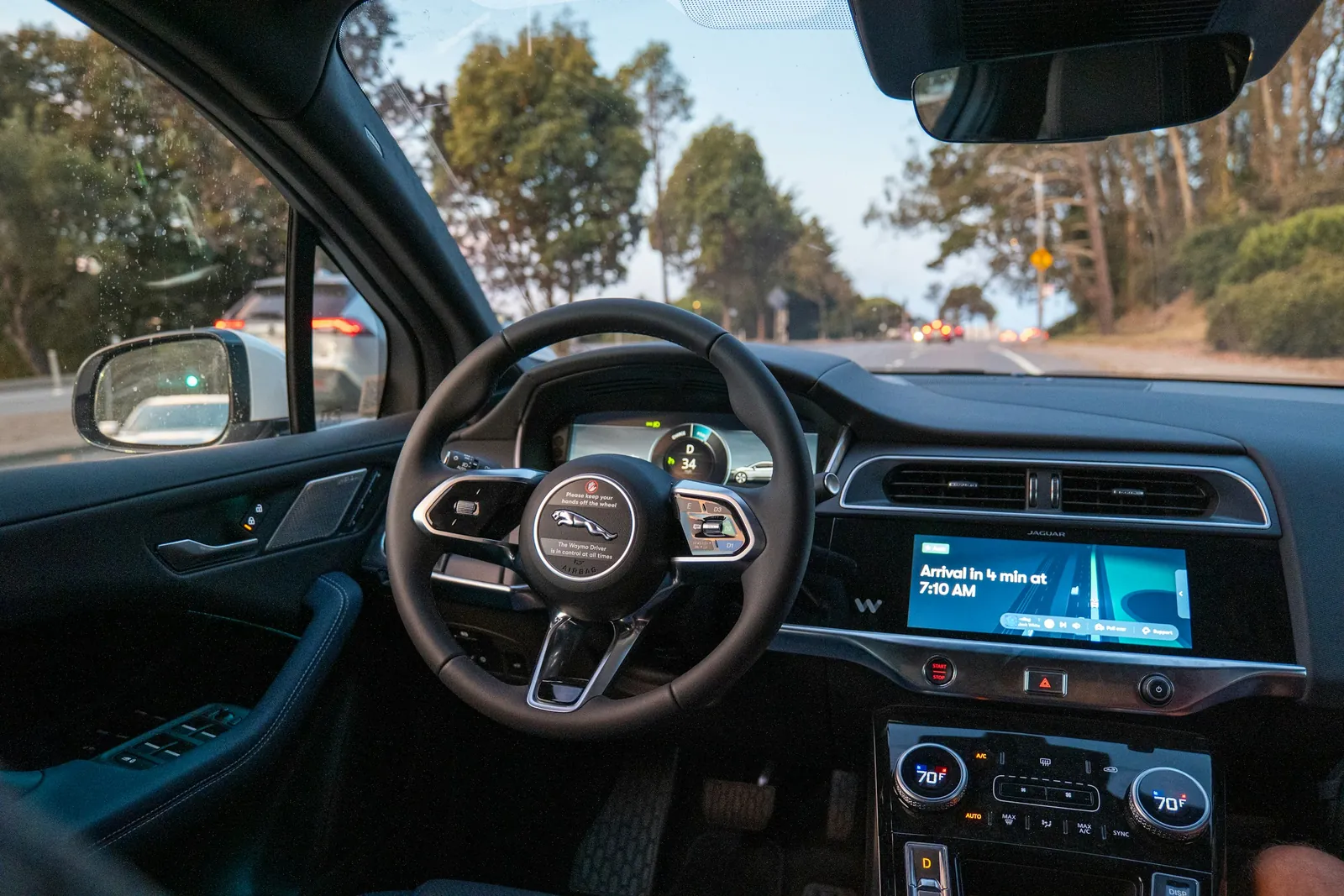
The most common answer is that it keeps moving. Waymo reports its trips and miles to California's Public Utilities Commission, and an analysis of those reports from August 2023 to December 2025 found that only about 54% of the miles its cars drove in California had a passenger on board.1 Since mid-2025 the share has held at 55 to 57%, so more than 40% of the miles are still driven empty: repositioning, waiting for a request, or heading to a pickup.
The same analysis found the gap between two trips shrinking, to about 18 minutes on average by the end of 2025. That is 18 minutes, many times a day, in which each car has to be somewhere.
At the depot
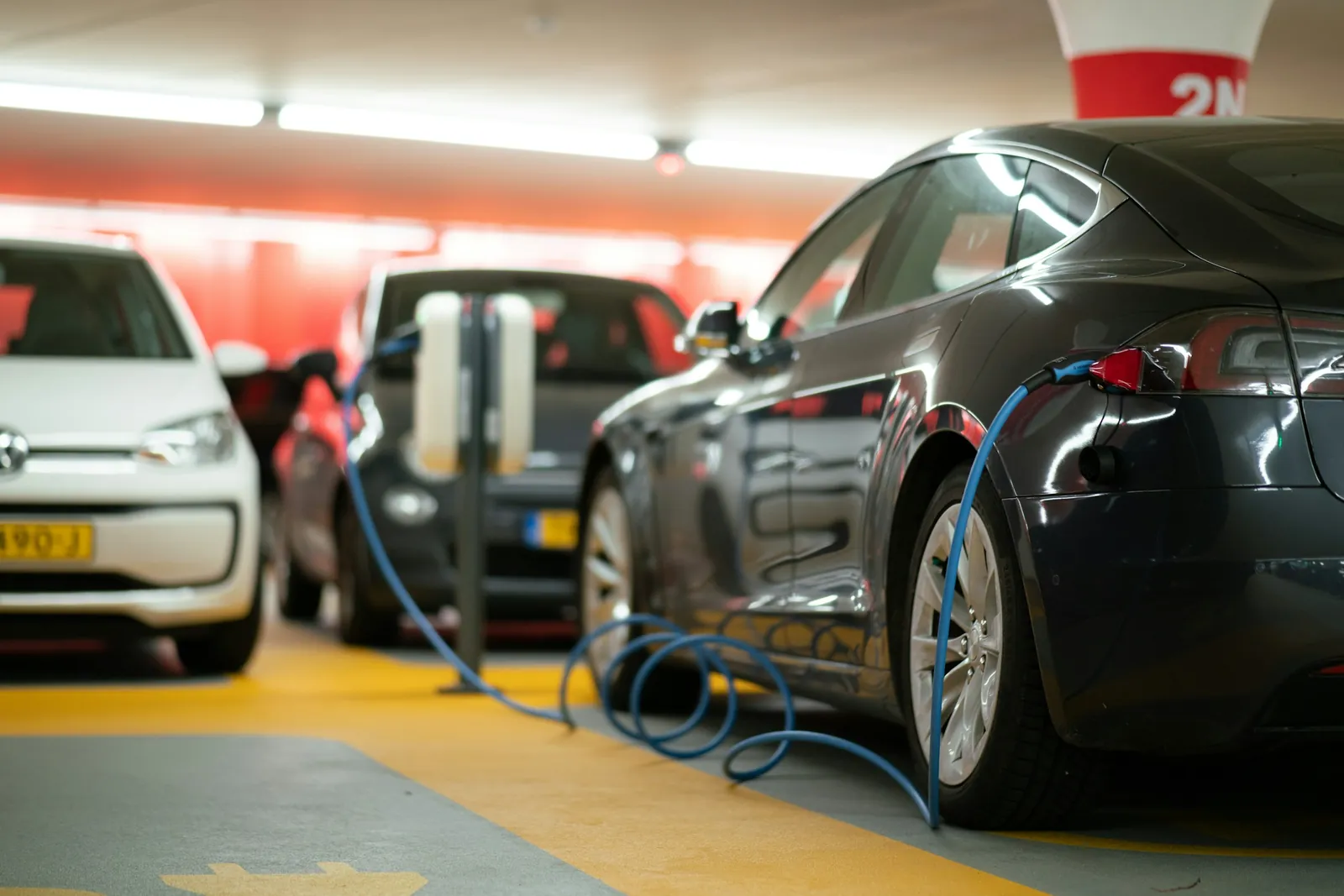
Robotaxis need charging, cleaning and the odd repair, and that happens at a depot. Waymo's largest, in the Bayview district of San Francisco, can service hundreds of vehicles. Staff contracted through Transdev and other firms plug in chargers, clean interiors and handle maintenance, while most cars wait on a large outdoor lot until they are serviced or sent out.2
Depots tend to sit away from the city centre, where land is cheaper.3 That makes every trip to one an empty trip, which is why at least one startup, Aseon Labs, is building small automated pods to clean and charge robotaxis in parking spaces spread through the city instead.
In a parking lot
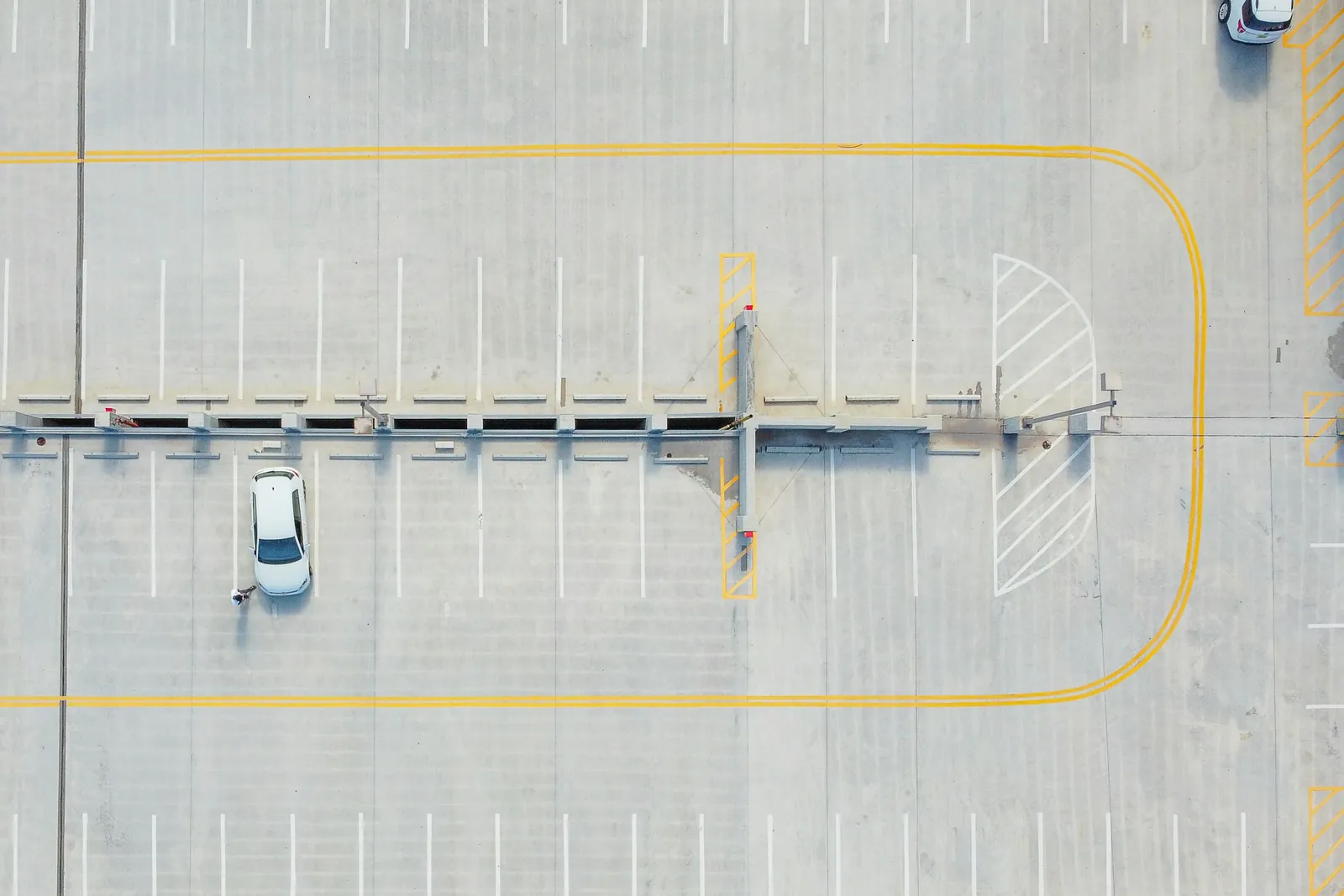
Ordinary parking lots serve as rest stops too. In August 2024, Waymo cars had been using a lot on Second Street near Harrison Street in San Francisco as a rest stop between rides for a few weeks when neighbours in the high-rises around it complained that the cars were honking at each other through the night. The horns came from a safety feature meant to prevent low-speed collisions.4 Waymo updated its software; some neighbours said they were still woken in the early hours afterwards.
At charging lots, overnight
Santa Monica went further. In November 2025 its city council voted 6–0 to declare two Waymo charging lots on Broadway a public nuisance and to order overnight operations there to stop between 11 pm and 6 am, after complaints from neighbours.5 Waymo sued the city that December. A court ordered the overnight stop in July 2026, and an appeals court paused that order in September while the appeal runs.
The noise is the headline. The underlying question is simpler: where a fleet waits is now something a neighbourhood, and therefore a city, has a view on.
At the kerb
The fourth option is to wait at the kerb, close to where the next ride starts. A 2026 simulation of San Francisco found that when robotaxis could not wait at the kerb, they drove nearly 60% more; kept off residential streets and metered spaces only, they drove 2% more.6 The details, and how a kerbside staging area differs from a depot, are in What is a robotaxi staging area?
What changes in Europe
Most of what is known comes from the US, where one operator per city has been the norm. Europe starts differently. London has four companies running or testing robotaxis at once, and kerb space in European city centres is scarcer than in San Francisco. In Germany, ride-hail cars must go back to their base after each trip unless the next order is already in, and whether robotaxis will carry the same duty is still being argued.
That makes the waiting question one for cities to answer up front: where robotaxis may wait, how many at a time, at which hours, and who gets the next free spot when several operators want the same one. A staging area set aside by the city answers the first three. Handing out its spots fairly between competing fleets is the job Lanoo is built for.
Sources
-
Awad Abdelhalim, Millions of Trips, "Waymo" Empty Miles: California's First Thousand Days of Commercial Robotaxi Service, Findings, May 2026. ↩
-
Business Insider, Take a look inside Waymo's largest robotaxi depot, February 2026. ↩
-
TechCrunch, Robotaxis drive miles just to get cleaned and charged; this new startup wants to fix that, June 2026. ↩
-
The San Francisco Standard, 'Waymos be wildin': Despite promised fix, honking robotaxis still aggravating neighbors, August 2024. ↩
-
Santa Monica Daily Press, Santa Monica orders Waymo to halt overnight operations at charging facilities, and the appeal ruling, September 2026. ↩
-
Bahk, Hyland, Shaheen, Wolfe and Cohen, Staging at the Curb, Transportation Research Part A: Policy and Practice, August 2026. ↩