What is a robotaxi staging area?
Where robotaxis wait between rides, why it matters to cities, and how a staging area works when several operators share one city.
The Lanoo team··5 min read
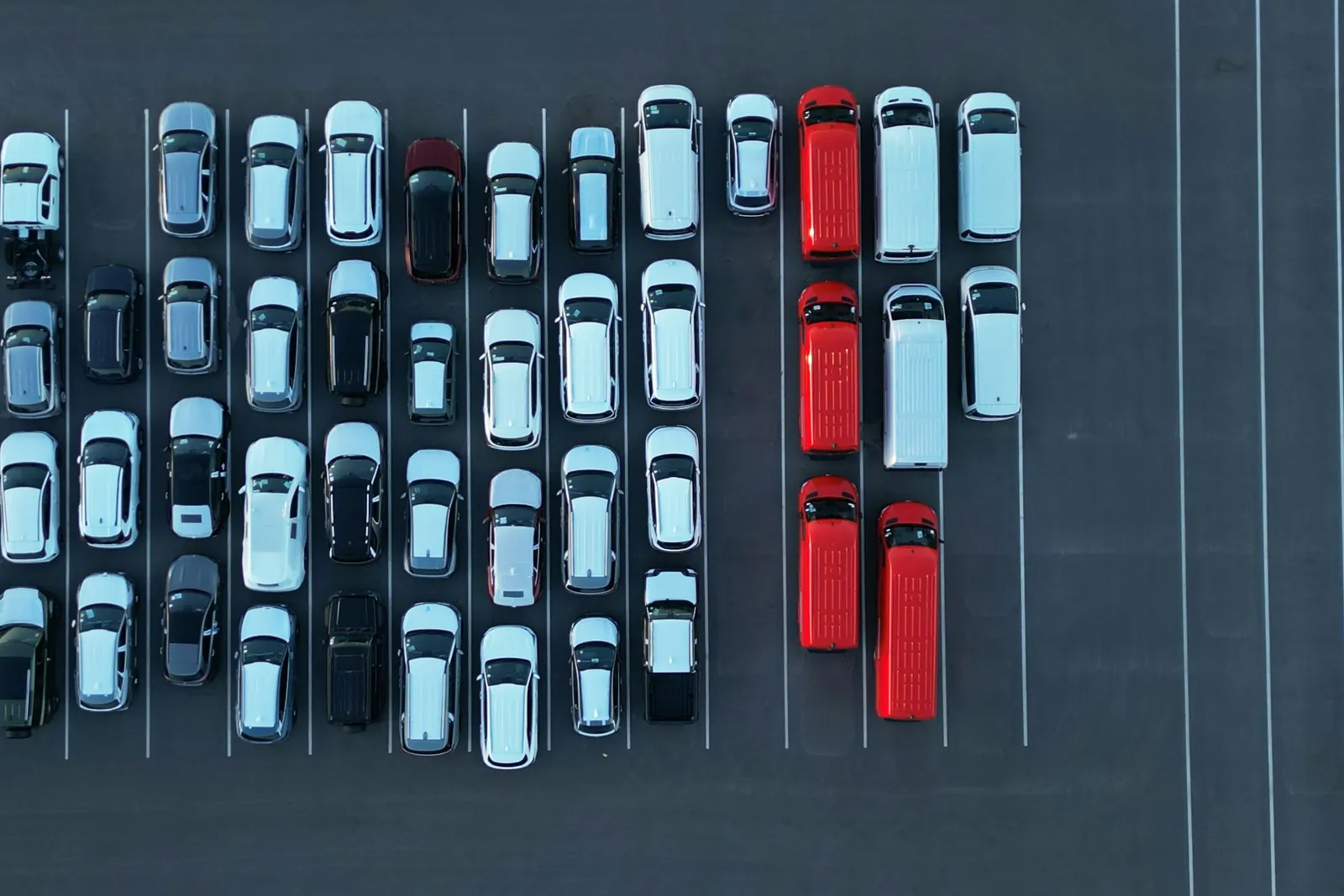
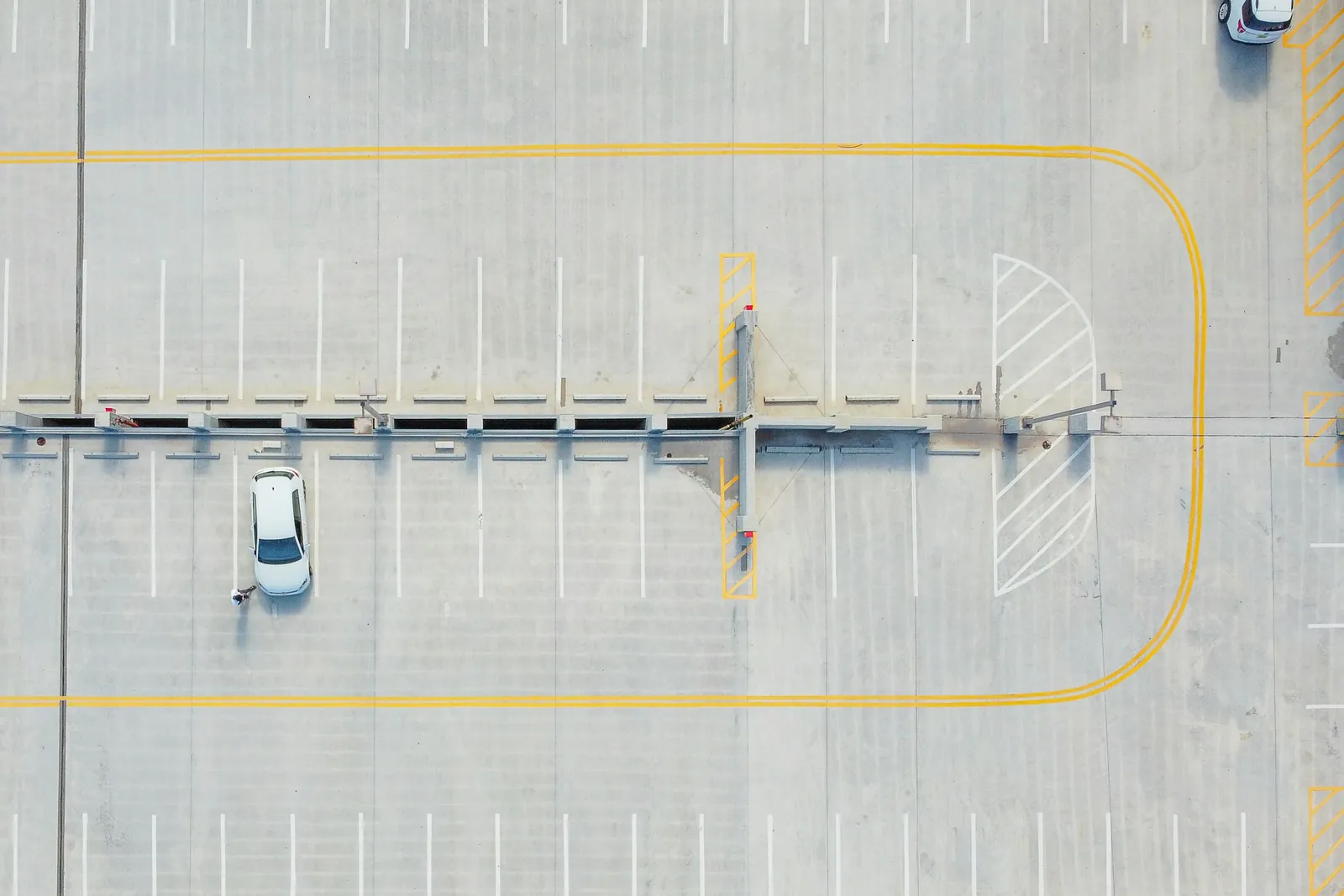
A robotaxi staging area is a place set aside for driverless vehicles to wait between rides. Like a taxi rank, it is reserved by a city or a property owner, holds a fixed number of spots, and comes with rules about who may use it, when, and for how long.
Robotaxis can drive themselves from one passenger to the next. What they cannot do is wait nowhere. Between two rides a vehicle is empty, and it has three choices: keep driving, go back to a depot, or stop somewhere close to where the next ride is likely to start. A staging area is that somewhere.
Why robotaxis need somewhere to wait
An empty car that keeps moving costs energy, wears the vehicle and adds to traffic without carrying anyone. A 2026 simulation of a robotaxi fleet in San Francisco, 1,700 vehicles serving 68,000 trips a day, found that when the vehicles could not stop at the kerb to wait, they drove nearly 60% more.1 When they could wait only at depots, passengers waited far longer for a ride.
The same study found two things cities care about:
- Robotaxis waiting in designated kerb space used it 8 to 10 times more productively than private cars parked there.
- Keeping robotaxis off residential streets and metered spaces added only 2% to the distance they drove.
In other words, giving robotaxis a few well-placed spots to wait removes a lot of empty driving, and a city can choose where those spots are without much cost. It is one city and one model, so the numbers will differ elsewhere. The direction is what matters. Where robotaxis actually wait today, from depots to rented lots, is in Where do robotaxis go between rides?
How a staging area differs from a depot or a pick-up zone
The three are easy to confuse:
| Staging area | Depot | Pick-up and drop-off zone | |
|---|---|---|---|
| What happens there | Waiting for the next ride | Charging, cleaning, repairs | Passengers get in or out |
| How long | Minutes, sometimes longer | Hours | Seconds to a minute or two |
| Where | Close to demand | Wherever land is cheap | At the passenger's door |
| Who runs it | A city or a property | The operator | A city or a property |
A depot is the operator's own ground. A staging area is usually someone else's: a strip of kerb, part of a car park, a corner of a station forecourt. That is why it comes with rules, and why the city or property, not the operator, decides where it goes.
What the rules say in Europe
Europe has no single rule for where a robotaxi may wait. Two examples show how far apart countries are.
Germany. Ride-hail cars there, Mietwagen, must return to their base after each trip unless they already have the next order.2 Whether robotaxis will carry the same duty is still debated.3 If they do, an approved staging area close to demand is worth far more to an operator than a base on the edge of town.
Denmark. Since 1 July 2025, the Danish Road Directorate can approve trials of vehicles up to Level 4, in defined areas, for up to two years at a time. A person must always be able to take over, either in the vehicle or as an operator outside it.4 Where vehicles wait is part of what each trial has to settle.
Either way, the place a robotaxi waits is becoming something cities decide, not something operators work out alone.
When several operators share one city
With one operator, a staging area is simple: its vehicles use the spots. With two or three, someone has to know which spots are free and give them out, or vehicles arrive to find their spot taken and start driving again.
No operator can be that party for its competitors. It would see their fleets, and they would not trust it to be fair. The job falls to the city, or to a neutral layer that works for all of them.
That layer only needs what a booking holds, much as air traffic control knows a flight plan and not the passengers on board:
- which vehicle and which operator,
- which staging area, and when the vehicle will arrive,
- when it checked in, and when it left.
It does not need routes, passengers or where a ride ended. Operators keep those, and the city still gets a full picture of how its staging areas are used.
What a city needs to set one up
- The place. Where the area is, drawn on a map, and how many spots it holds.
- The rules. The longest a vehicle may wait, the hours it is open, and which operators may use it.
- A way to hand out spots. So that two vehicles are never sent to the same one.
- A record. How full each area was, who used it, and who booked but never came.
Open formats already exist for the map side. The Curb Data Specification from the Open Mobility Foundation describes kerb zones and the rules on them, so an area drawn once can be read by every operator.
This is the problem Lanoo is built for: cities and properties draw staging areas and set the rules, and operators book a spot through one API before the vehicle sets off.
Sources
-
Bahk, Hyland, Shaheen, Wolfe and Cohen, Staging at the Curb: Evaluating the impacts of shared automated vehicle fleet operations under curb usage restrictions, Transportation Research Part A: Policy and Practice, August 2026. ↩
-
§ 49(4) of the German Passenger Transport Act (PBefG). In large cities another approved parking place can serve as the base. See taxi heute. ↩
-
Tagesspiegel Background expects autonomous services to be licensed as Mietwagen; the German bus operators' association wants the return duty kept (busplaner). ↩
-
Executive Order no. 925 of 24 June 2025 on trials with self-driving motor vehicles (in Danish). The rules country by country are in Robotaxi rules in Europe. ↩